
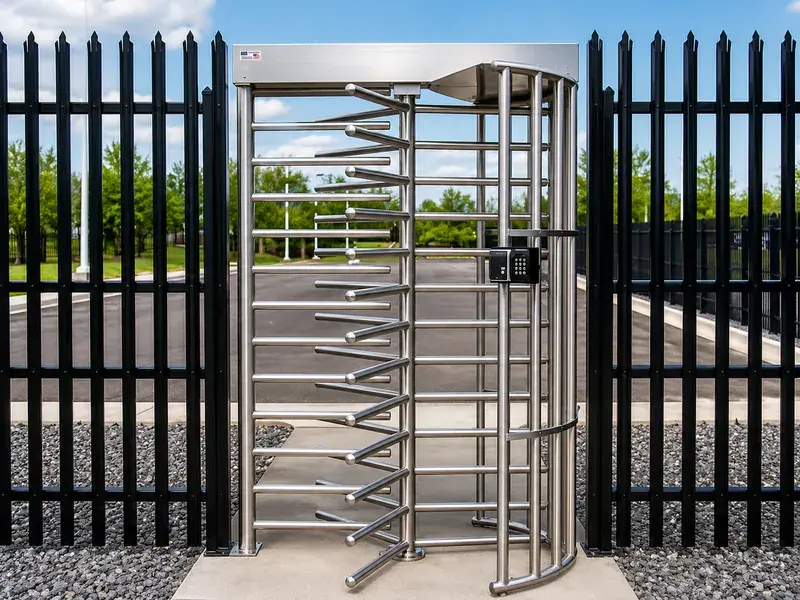
How to choose a commercial turnstile system
The biggest mistake on broad turnstile searches is treating every lane as interchangeable. The right decision depends on how much physical deterrence you need, how traffic arrives during peak periods, which credentials or ticketing systems must integrate, and whether the project is indoor, outdoor, staffed, unattended, or ADA-constrained. This hub is designed to get buyers from a broad query to a fit-review page that actually answers the next question.
Security level: define whether the lane needs deterrence, anti-tailgating intelligence, or simply orderly throughput.
Throughput: model peak 15-minute bursts, not daily averages, before picking cabinet size or lane count.
Indoor or outdoor: climate, washdown, and corrosion exposure determine finish, canopy, and controller placement.
Staffed or unattended: remote operation needs stronger alarm handling, recovery logic, and user guidance.
Credential or ticketing integration: confirm reader bays, controller protocol, and event logging before specifying hardware.
ADA companion lane: pair accessible circulation with the main lane family instead of treating it as an afterthought.
Fail-safe or fail-secure: align emergency release behavior with the life-safety plan and local authority review.
Power and network: verify conduit, voltage, UPS, and network drops early so site prep does not block commissioning.
Shipping, install, and site readiness: slab conditions, bollards, anchors, swing clearances, and freight access all affect schedule.
Budget inputs: use category and scope ranges to compare options, then route pricing intent to the buying guide or quote workflow.