
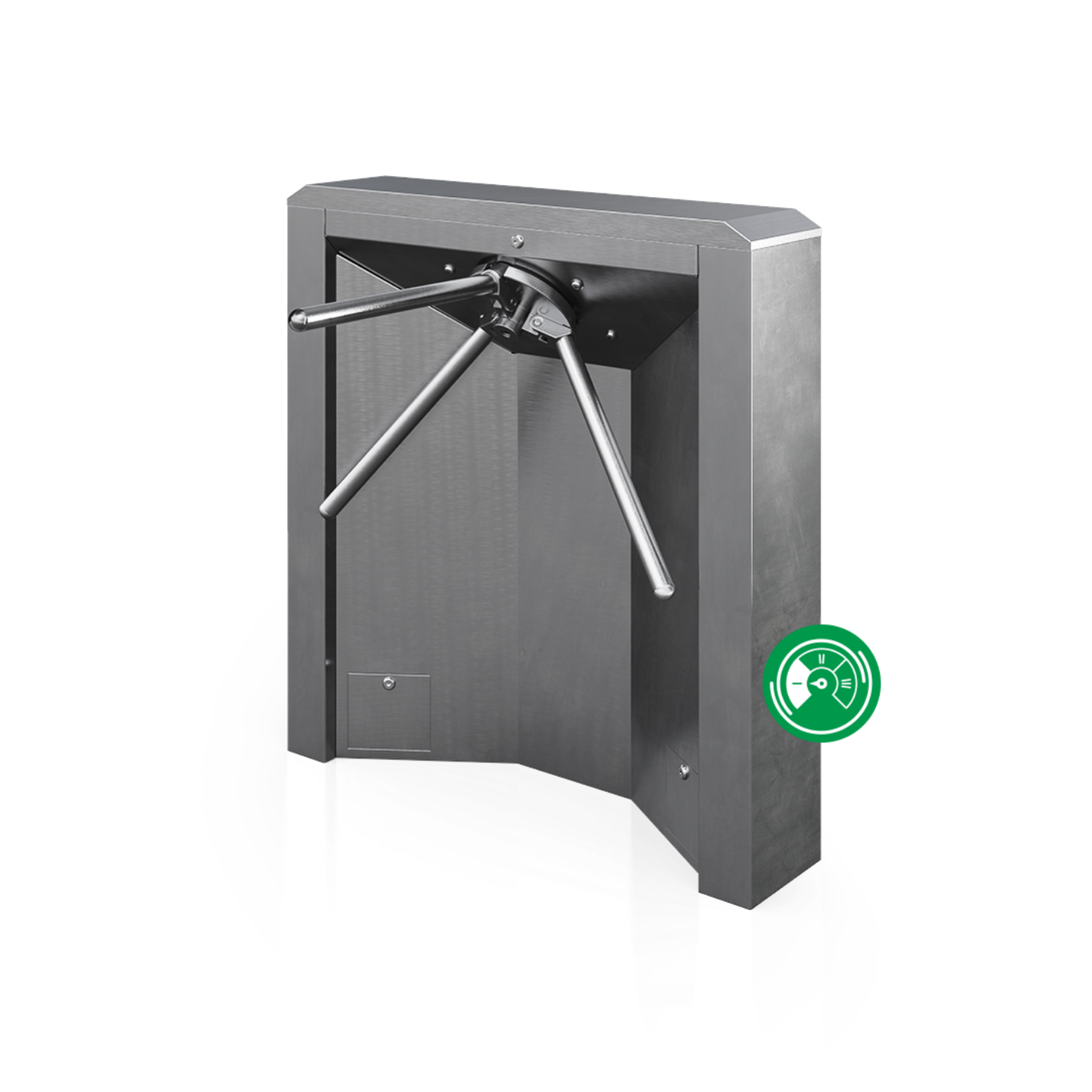
Tripod category
Tripod Turnstiles for Staffed Entry and Repetitive Flow Selection
Use this page when the opening already points toward a tripod lane and the next step is comparing arm style, operating mode, staffing assumptions, and site fit before requesting a quote or field review.
Tripod turnstiles are usually considered for repetitive entry programs that want economical one-person passage control and straightforward credential triggering while keeping accessible companion-lane, queue, egress, and site-condition questions visible.
Typical fit
Supervised transit, stadium, campus, and industrial checkpoints where the project needs economical one-person passage control for repetitive traffic instead of a premium lobby presentation.
Plan carefully
Entries with changing staffing coverage, exposed weather, mixed visitor and delivery patterns, unresolved reader ownership, or open questions about companion-lane planning and emergency release.
Usually not the first choice
Premium front-of-house lobbies, sites that primarily need a broader waist-height barrier program, or openings where the accessible companion lane is still the main unresolved decision.
Comparison matrix
Tripod turnstile facts that are public today
Public row values stay visible when they exist; unsupported throughput, accessibility, and site-readiness assumptions stay listed as unknown or project-review items.
| Criterion | Trilock 900 | Needs project review |
|---|---|---|
| Arm style and emergency mode on current public rows | Unknown | Confirm fixed-arm versus drop-arm behavior, emergency release expectations, and whether the actual checkpoint wants a different lane family. |
| Direction of operation | Unknown | Confirm one-way, bi-directional, staffed override, and denied-entry workflows with the operating team before final selection. |
| Public duty or cycle label | Unknown | Treat duty labels as comparison inputs only; verify staffing, queue bursts, credential dwell time, and exception handling on the live site. |
| Power and controller preparation | Unknown | Verify voltage, power-supply location, disconnects, and controller ownership before treating the lane as install-ready. |
| Reader and integration path | Unknown | Confirm reader placement, controller protocol, event logging, and alarm handoff with the access-control team. |
| Environment and exposure package | Unknown | Review canopy, weather, corrosion, washdown, drainage, and footing conditions from current site documents or a field walk. |
| Accessible companion-lane role | Unknown | Use the accessible companion-lane planning page to review wider clearances, assistance workflow, and route geometry instead of assuming the tripod lane settles them. |
Selection criteria that usually decide the lane
- Confirm the checkpoint is expected to stay staffed or actively supervised before treating a tripod lane as the default answer for every controlled-entry opening.
- Model repetitive staff, contractor, or patron waves as a queue and staffing problem first. A public duty or cycle label does not prove deployed throughput on the live site.
- Treat weather exposure, canopy coverage, drainage, slab or railing tie-in, and corrosion conditions as separate checks so the selected lane matches the real environment.
- Keep reader placement, controller ownership, alarm behavior, and exception handling with the integration review instead of assuming a simple credential trigger settles the workflow.
- Route wider accessible circulation and companion-lane needs to the dedicated accessible-entry planning page instead of treating tripod hardware as the accessible path by itself.
1 products in this category
Questions buyers usually ask about tripod turnstiles
When does the tripod category page help most?
When the project already points toward a supervised tripod lane and the next questions are arm style, operating direction, environment fit, staffing assumptions, and what still needs review before quoting.
Does this page confirm deployed throughput, accessibility, or final emergency-release behavior?
No. It keeps throughput, accessible companion-lane planning, emergency release, egress, and approval decisions with current site documents and qualified reviewers.
When should a buyer move to waist-height or accessible companion-lane pages instead?
Move to waist-height pages when the checkpoint is really comparing broader barrier presentation and circulation behavior, and move to the accessible companion-lane page when wider clearances, assistance workflow, or route geometry are still the main unresolved decisions.